Embodied Bride
Jan 8, 2026
Embodied Event Production
After 15 Years of Weddings and Festivals, Here’s What Actually Creates Presence
I’ve produced events with almost no money that felt more alive than weddings with seven figure budgets, and I’ve watched half a million euro weddings feel completely dead because everyone was too busy performing to actually be present. And the difference isn’t the budget. It’s not the flowers or the lighting or whether you had the designer chairs. The difference is whether you designed for embodiment or for performance, and the wedding industry has spent the last decade optimising for the wrong one.
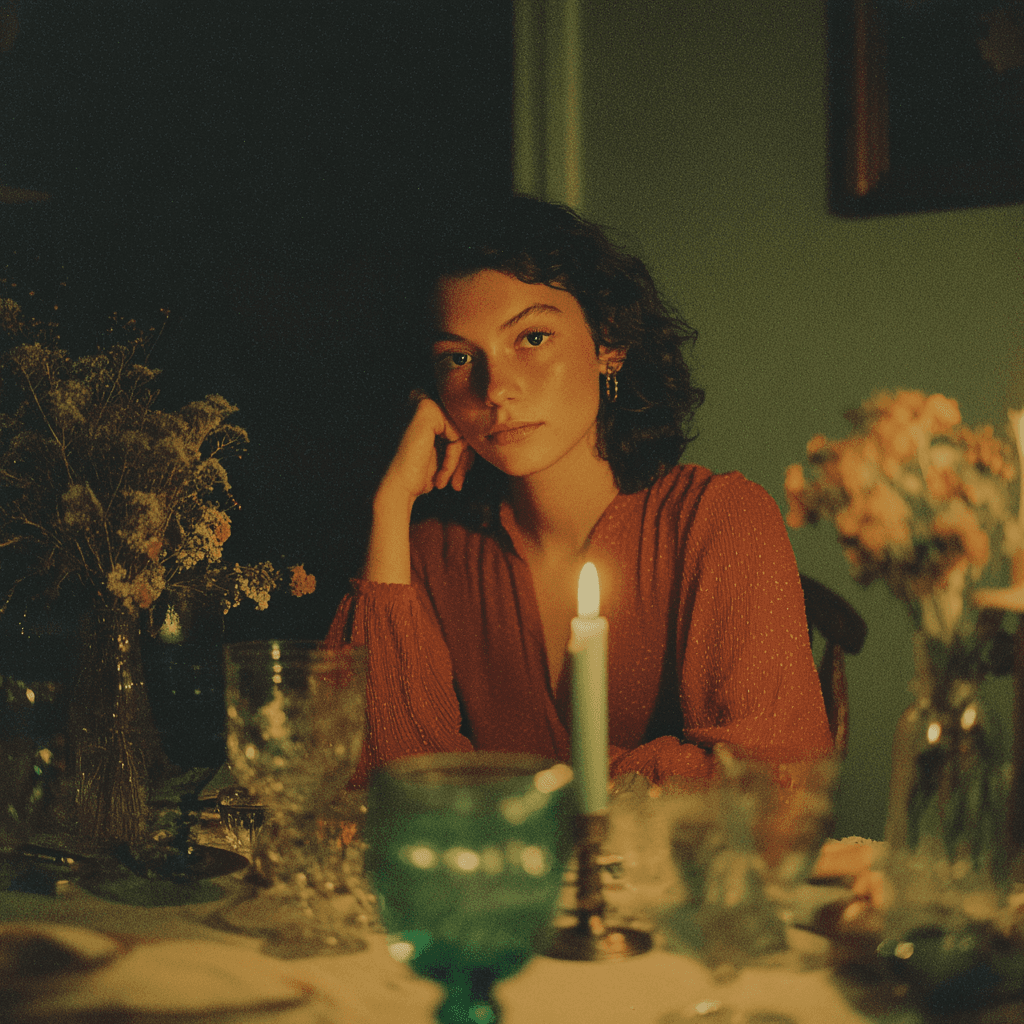
C and L got married in Mallorca. €16,000 budget. 37 guests. They traveled with their entire wedding party for a week before the ceremony, like really traveled together, did the whole pre-celebration thing. The reception was one long table lit entirely by candles. No Instagram backdrop, no centrepiece that cost more than someone’s rent, just one table where everyone could actually see each other’s faces.
I remember standing back halfway through dinner watching them and they were laughing like people who’d known each other for years even though half the guests had just met that week. Someone would tell a story and someone else would jump in and it was like watching the table co-create the experience instead of just consuming it, you know? I caught myself thinking I would love to sit at this table with these people and call them my friends. Which is rare. I’ve done a lot of weddings. That feeling is rare.
That’s what I mean when I talk about embodiment. It’s what happens when you design a space that lets people actually be present instead of just look good. When the structure is there but it’s not so rigid that there’s no room for people to breathe, to play, to let something spontaneous emerge.
Compare that to the planner I once worked alongside who charged top dollar, showed up for setup, and then literally snuck out during dinner. Just got up and left. Her clients paid her thousands to coordinate the day and she disappeared before dessert was served. Guests were wandering around confused, needing help, and the event crew from other departments had to step in and handle things they weren’t being paid to handle because they actually cared about the experience in the room. They loved the space. They understood we’re supposed to be in this together. The greatest gift, to be able to play together.
That’s performance. That’s what happens when someone is executing a service instead of holding space, when it’s about getting the job done and getting the photo and getting out.
The wedding industry trains you to optimise for performance. It sells you the idea that if you just get the aesthetic right, if you just nail the colour palette and the floral design and the perfect golden hour photos, then the day will feel meaningful. But aesthetic has nothing to do with meaning. You can have a gorgeous wedding that feels hollow and you can have a simple wedding that cracks people open and the difference is whether people feel safe enough to stop performing and actually be there.
I learned this working festivals. Festival production is the opposite pendulum swing from weddings. Weddings are over planned, over budgeted, every minute accounted for. Festivals are held together by love and zip-ties and the collective desire to create something that matters. No money, infinite creative ideas, and somehow those spaces feel more alive than events that cost 50 times as much. Please remember to fund the arts, by the way. It’s very important to us as a species. But anyway, the reason festival spaces feel different is intention.
Festival crews understand that the people create the experience, not the production budget. You can design for aliveness or you can design for documentation and most weddings are designed for documentation. They’re built to look good in photos, to perform well on Instagram, to prove to everyone watching that you did it right.
The moments that actually matter are the ones happening between the planned moments. The conversation that breaks out at the table. The spontaneous dance floor that forms before the official first dance. The way people lean in when they feel safe enough to stop worrying about whether they look good and just be.
You can’t manufacture that. You can only create the conditions for it. And the conditions have nothing to do with how much you spent on flowers.
I’ve been doing this for 15 years. Intern to planning multi million euro budgets, weddings and festivals and corporate events and grief circles and everything in between. And the thing that makes a space come alive is never the thing the wedding industry is trying to sell you. It’s not the centrepieces. It’s the people you put in the room and whether they feel safe enough to stop performing. It’s not the timeline. It’s whether the structure holds the container but leaves room for spontaneity. It’s not the aesthetic. It’s the intention underneath the aesthetic and whether that intention is about connection or about impressing people who won’t remember what your napkins looked like anyway.
The wedding industry doesn’t want you to know this because if you knew what actually mattered you’d stop spending money on the things that don’t. You’d realise you don’t need €20,000 in flowers. You’d realise the venue matters less than the guest list. You’d realise that designing for presence requires completely different choices than designing for performance and those choices often cost less money, not more.
I’m here because I got tired of watching people miss the point. I got tired of seeing couples stressed into paralysis by an industry that profits from their anxiety. I got tired of the manipulation, the occupation based pricing, the manufactured urgency, the way saying the word wedding adds 30% to every quote for no reason other than that they can.
But mostly I got tired of watching people design their wedding for everyone except themselves.
I'm here to share what I've learnt in this space. The difference between events that look good and events that feel good. What you should actually spend money on and what you can skip entirely. Stories from weddings that went beautifully and weddings that went sideways. What festival culture understands about embodiment that the wedding industry forgot. How to design a celebration that honours what actually matters to you instead of performing for an invisible audience that doesn’t even exist.
You don’t need a massive budget to create something profound. You need clarity about what you’re actually trying to create and the willingness to prioritise presence over performance.
That’s what I’m here for.